
With a citizen-centric approach and a strong focus on co-creation, SIMPLEX is a simplification and modernization program focused on improving public service efficiency and designed to facilitate the citizens and businesses everyday life, and their interaction with the public administration.
Launched in 2006, it had several editions since then and resulted in the implementation of hundreds of initiatives that cut red tape, reduced context costs and used ICT to deliver better public services.
Innovation Tag: Service Design
Adur and Worthing Councils implemented a low code development platform to help them take control of their digital transformation. A small digital team is building end-to-end user-centred digital services that are replacing expensive and inflexible legacy systems. Low cost, fast and flexible, this pioneering digital strategy has delivered multiple customer and efficiency benefits, won national awards and central government recognition.
The integration of health and social care was seen by the Scottish government to require support to ensure that benefits of both national and local data and knowledge were able to be shared across two very different cultures and service providers to jointly develop more appropriate services for local populations.
LIST using their expertise in analytical work was seen as a way to develop a sound evidence base to allow decision makers to develop effective services.
Case Study
Speak up via WhatsApp: A Qualitative WhatsApp Survey of Syrian Refugees and Lebanese Host…

The United Nations Development Programme Lebanon used WhatsApp to conduct qualitiative surveys to listen to Syrian refugees in Lebanon dealing with conflicts with the local Lebanese community. Using Whatsapp is an effective tool for collecting qualitative data from vulnerable communities at scale. WhatsApp is widely used, with 84% of refugee households in Lebanon on WhatsApp. WhatsApp's voice message function allowed us to send survey questions as voice messages and collect people’s stories…
The Northern Ireland (NI) Public Sector Innovation Lab has organised a hackathon, “Hack the Pain,” to address these needs of an underserved group: people with persistent pain. These individuals need for better information services for self-management, and the projects that emerged from the hackathon include a virtual reality app for mindfulness, a pain tracking app and a website of information on pain management techniques.
The frameworks for creating and managing the rule of government, as reflected in policies, legislation and regulation, are still based on a paper paradigm. In a digital world this creates poor service experiences and often the intent of a policy is not achieved. Instead if we co-design authoritative machine-consumable rules we can provide better services for citizens, better delivery of policy intent, and enable communities, NGOs and private sector to be part of a government service ecosystem.

HubGov is an interinstitutional program of innovation in Government that has the participation of institution from the three spheres and three powers. Through a learning trail in innovation and intrapreneurship skills, each institution comes up with a complex challenge and at the end of the program presents a solution proposal to this challenge.
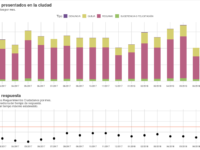
Bogota’s Citizen Complaints Dashboard (Tablero Control Ciudadano) is a preventive and social control web tool that displays the requirements that the citizens put before the public offices. The Citizen Complaints Dashboard gives access to public officials and citizens to the analysis and monitoring of complaints, claims and compliments entered into the System.
The Citizen Complaints Dashboard highlights alerting data related to issues regarding time of attention to the requirements as well as…

Minneapolis Public Schools Culinary and Wellness Services rolled out the "Street Eats" food truck in the summer of 2018; designed to increase access to no cost, healthy meals for all youth ages 18 and under. The truck serves at community locations during the summer months where food access is currently limited, such as parks, schools, camps, and libraries.
The Government Digital Service and the Ministry of Housing, Communities and Local Government launched the Local Digital Declaration to support and unite local authorities around a shared understanding of good digital practice.
It is a unique call to action that addresses the legacy IT contracts, isolation of procurement practices and siloed digital projects that have left local government services vulnerable to high delivery costs and low customer satisfaction for the public they serve.