

The Government of Armenia has launched “iGorts” - an unprecedented program that invites Diaspora Armenian professionals to work in Armenia's state institutions. Within the framework of the program, Diaspora Armenian professionals are placed in state agencies in need of their expertise and have the opportunity to lend their experience and knowledge toward improving and developing the state institution and its policies and programs.
Case Study Library
Where innovations are collected and shared to disseminate and replicate good ideas

Innovations:
0
This website, as well as any data and map included herein, are without prejudice to the status of or sovereignty over any territory, to the delimitation of international frontiers and boundaries and to the name of any territory, city or area.
National Corporate Innovation Index (NCII) is a comprehensive capacity building platform developed by the State Agency for developing innovators in the public sector. NCII means measuring the organization's innovation ability and success, and taking measures to build an innovation culture within the organization. With the creation of NCII, there is direct support for finding solutions to the difficulties and problems faced by state organizations in the implementation of their daily activities…
With the Quality Tools an organisation can evaluate, monitor and compare the quality and use of its services within and between organisations. The tools include a Self-assessment, Customer Feedback and Utilisation Rate Measurement tool and are free of charge. The tools were developed primarily for public sector organisations to help them develop customer-oriented digital services and improve knowledge-based management. On a national level the tools provide data on the state of digitalisation.
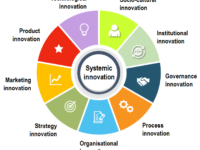
Becoming a circular economy entails a deep transformation of industry, consumer behavior and policy. Traditional innovation funding focuses on technology, punctual projects and (single) companies, which alone fail to bring the required systemic change. Hence, the Flemish government launches the subsidy programme Living Labs Circular Economy for projects tackling complex challenges, with a high ambition level, in co-creation with very diverse stakeholders and employing system innovation methods.

How to bring new ways of working and problem-solving tools to the Estonian public sector? Over the course of a year and a half the Public Sector Innovation Team of Estonia developed a design sprint format suitable for the Estonian public sector. By constantly adapting and improving the format the Innovation Team has seen that it is a highly effective tool for spreading design thinking methods and generating enthusiasm around them.
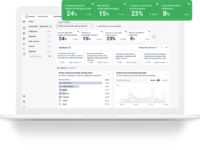
We live in an infodemic context. A lot of data doesn't mean good data. This brings to question the information sources and the data itself. Decision-makers don’t understand citizens’ needs and act based on uninformed decisions, and citizens feel neglected. This generates a systemic lack of trust. Citibeats' ethical AI makes helps governments interpret the huge quantity of data exchanged every day by citizens in real time, understand their needs, and make faster and better-informed decisions.
In 2021, SIRA clawed back $91 million in excess insurer profit earned on the sale of compulsory motor accidents insurance and returned it to NSW drivers. This move was made possible after the 2017 reforms introduced a transitional excess profits and losses (TEPL) mechanism that was designed to eliminate insurer ‘super profits’ of the past. To our knowledge, the activation of this mechanism to claw back excess insurer profit and return it to the people was a world first.
In 2021 Statistics Canada, Canada’s national statistical agency, successfully implemented a new strategy for coding write-in responses to questions asked on the Census of population. Fasttext, a natural language processing algorithm, was applied to 31 questions and approximately 7 million write-in responses that would have in the past been completed by human coders. This innovation significantly increased the coding efficiency by decreasing the time and cost required to code the 2021 Census.
Case Study
Personalized feedback service for national qualification test result – Digital Mentor Service…

"Why did I fail? How should I develop my career?" To address such concerns, we developed the Digital Mentor Service of National Qualification. It leverages massive data on national qualification tests to identify each individual's weaknesses and why they fail. It also provides personalized information by matching examination history with jobs and training offered by government agencies. Supporting test takers from skills assessment and development to job placement.

Since 2020, the City of Austin (COA) and the University of Texas (UT) have collaborated on over twenty diverse research projects under the legal and administrative framework of a five-year, ten million dollar master interlocal agreement (ILA). Among a very few of its kind in the USA, this ILA is an "innovation enabling innovation" that bridges the barriers between two large, extremely complex organizations and fast-tracks the launch of research and innovation projects by four to five times.