
Skip to content
An official website of the OECD. Find out more
Created by the Public Governance Directorate

This website was created by the OECD Observatory of Public Sector Innovation (OPSI), part of the OECD Public Governance Directorate (GOV).

How to validate authenticity

Validation that this is an official OECD website can be found on the Innovative Government page of the corporate OECD website.

View as: Map

Filter by:

Countries

Level of government

Sector

Year of launch

Stage of innovation

Recognition

Innovation Tags

Innovations:
0
This website, as well as any data and map included herein, are without prejudice to the status of or sovereignty over any territory, to the delimitation of international frontiers and boundaries and to the name of any territory, city or area.
Open and inclusive policy-making builds upon the idea of designing policies by broadening the evidence base. An innovative web-based tool called SME test enables the public (citizens, business entities, economic and other interest groups) to quantify the impact of their alternative policy proposals on SMEs, in addition to substantiating their comments and proposals on a public policy proposal. Despite the tool's ease of use, it enables users to conduct more sophisticated analysis.
High resolution satellite data were used to make a credible estimate of the number of brick kilns across the ‘Brick Belt’, helping to calculate the scale of modern slavery present. Brick kilns are high slavery-prevalent industries and before this work, the full scale of brick kilns and by proxy, slavery, was unknown, making action from the appropriate agencies difficult. This innovation provides data to help NGOs and governments fight modern slavery. This approach scales in time and space.
The Lab is an all-of-government neutral space enabling agencies to collaboratively innovate to make it easier for people to access government services. It's a design & development lab to experiment, drive and enable the systemic change of government for the benefit of society. We are providing a way to direct public funding to systemic improvements, horizontal efforts around shared goals, capability uplift, high value reusable components and actionable innovation for all participating agencies.
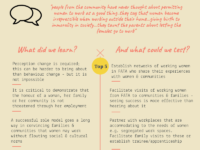
UNDP wanted to understand what strategies women outliers or “positive deviants” in remote and deeply conservative areas which have minimal technology coverage, used to successfully join the workforce, become educated and serve their communities. Positive deviance is an experiential problem-solving approach that identifies locally designed solutions and ensures narratives of the outliers are understood before designing a programme; this is critical for designing behavioural change…
Zika Mozzie Seeker (ZMS) transforms traditional presence/absence surveillance for invasive mosquito species by synchronizing citizen scientists set egg traps to provide 'early-warning' networks. Eggs from Do It Yourself ovitraps are aggregated and rapidly screened using a world-first method that can detect 'DNA' of one Aedes aegypti amongst 5,000 of the local species. Eggs from many (10-25) traps are batched into each polymerase chain (PCR) cohort, with results fed back to each participant.
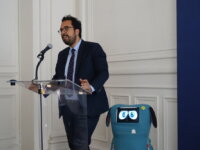
The active-waiting robot was developed by the French local-level Seine Saint Denis Innovation Lab. We created the robot R2-D3 to help reduce the digital gap with Departmental Home for Disabled Persons (Maison départementale des personnes handicapées) users. It informs users on various topics in a playful and simplified way. It can speak and understand many languages, which is useful in the context. And it can also collect data from users. It is user-oriented and it's built upon new robotic…
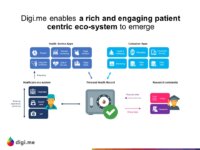
Patient Centricity empowers individuals with their own data through the use of innovative technology, making them the principle stakeholder in the health eco-system. The Icelandic Directorate of Health, in partnership with digi.me, has enabled a world first national patient-centric system by enabling individuals to download a copy of their data to a secure personal library which they own and control. This can then be accessed on demand by the individual from any device.
The Finnish Government has piloted a new innovative operating model based on co-creation and networking widely within the society. This so-called ‘The Ecosystem Forum’ aims at boosting human-centric digitalisation policy and data economy. It is a new way to formulate policies, prepare decisions and improve implementation. The forum is led by the State Secretary at Prime Minister's Office. In addition, the Prime Minister's Office has an active role in the facilitation of the network.
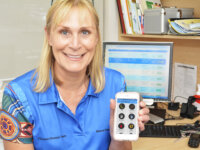
M♡THer is a novel interactive system designed to support women throughout diagnosis of gestational diabetes to the birth of their baby. It also improves multidisciplinary care co-ordination by providing shared access to the women’s clinical information. Clinicians saw an opportunity to improve service delivery to patients, and improve care provision, particularly as referrals to GDM services dramatically increase. No other technology like this could be found, at the time of development.
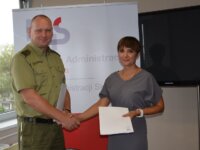
In light of the merger of three fiscal agencies into one, the Opolskie Revenue Administration developed a management model aimed at achieving the best results which is tailored to the needs and expectations of employees and the surrounding society. The new management model obtained a better understanding of the tax administration's mission by the local community by focusing on: user-centricity; stakeholder involvement in tax office to show transparency and public involvement; and listening…