
Every week millions of people use the UK government's GOV.UK website to do complex and sometimes life-changing tasks, such as learning to drive, getting a visa, or starting a business.
In the past, finding the guidance, forms and online services you needed could be difficult and time-consuming.
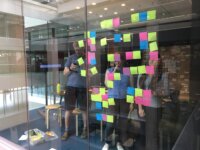
Step-by-step navigation is a new feature on GOV.UK that allows any service to be represented as a series of simple steps.
Country: United Kingdom
High resolution satellite data were used to make a credible estimate of the number of brick kilns across the ‘Brick Belt’, helping to calculate the scale of modern slavery present. Brick kilns are high slavery-prevalent industries and before this work, the full scale of brick kilns and by proxy, slavery, was unknown, making action from the appropriate agencies difficult. This innovation provides data to help NGOs and governments fight modern slavery. This approach scales in time and space.
Illegal and unethical employment practices should not be tolerated where public money is being spent. The Code of Practice on Ethical Employment in Supply Chains calls on all organisations receiving public money directly or via contracts to ensure legal and ethical employment for workers in supply chains. The Code’s commitments are designed to combat modern slavery and exploitative practices and to promote responsible employment to improve workers’ lives in Wales and across the world.
The Model Hospital allows trusts across the NHS in England to benchmark their productivity and identify areas to improve across the range of services they delive. For the first time, it provides data on productivity, performance and quality in the same place,
highlighting opportunities to improve productivity and reduce variation. The Model Hospital leverages the power of benchmarking to provide concise, insightful, actionable strategic information to support trusts to improve care for patients.
GOV.UK Verify enables people to create a ‘digital identity’ that can be trusted by any public or private sector organization. The UK government standards to which Verify operates are recognized by EU and North American governments enabling international interoperability. Catalyzed by demand from digital public services, from Nov 2017 Verify will be usable by private sector services.
This project uses text analytics to help the UK civil service derive value and manage risk from high volumes of unstructured digital information that has accumulated over the decades. We are also exploring the potential of technology to support real-time categorization and connect staff working on similar challenges across organizations to improve productivity and outcomes.
Accessing local council and central UK Government services using voice.
DASA finds and exploits innovations which support the defense and security of the UK to help protect our people against our adversaries, faster and more effectively whilst generating economic value for the UK. We help businesses to grow and become successful. We provide funding and other support, helping people to access end-users, develop and test their products and linking our partners together.
The Open Innovation Team is a new Cabinet Office team created to help departments generate analysis and ideas for priority projects by deepening collaboration with academics. We boost engagement between officials and academics by organizing tailored events and visits, and we get academics involved in research and policy projects by inviting them to work alongside us in Whitehall.
For the first time in Ireland, the State Laboratory have developed and implemented an analytical strategy allowing postmortem forensic toxicology samples to be screened for previously 'invisible' designer drugs outside the traditional scope of testing. This project has supported the Irish Coroners service in solving death investigations that previously could not have been satisfactorily concluded.