

Since 2020, the City of Austin (COA) and the University of Texas (UT) have collaborated on over twenty diverse research projects under the legal and administrative framework of a five-year, ten million dollar master interlocal agreement (ILA). Among a very few of its kind in the USA, this ILA is an "innovation enabling innovation" that bridges the barriers between two large, extremely complex organizations and fast-tracks the launch of research and innovation projects by four to five times.
Innovation Tag: Process Improvement/Simplification
BORA (acronym for "Online Relationship Database for Evaluators", in Brazilian Portuguese) is an innovative online application developed by ENAP that connects research professionals and policy managers around the country. The app makes it possible to link the needs of Brazilian public administration for high-quality policy analysis and the research of well-targeted projects by specialists based on a quick, transparent and free solution.
Case Study
BIFIDEX – Official Business and Financial Analytics for the single market in the Western…
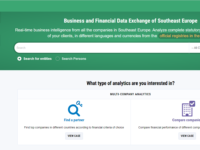
Countries in the Western Balkans created digital infrastructure to support transparent business operation and prevent fraud in their Common Regional Market. The official registries from 5 countries in the Western Balkans created a digital platform, connecting all official legal and financial data about companies, connected entities, blocked bank accounts and sanctioned persons, bridging different legislations, languages and currencies. The platform won the 2022 OECD/SIGMA/ReSPA award.
The Future Tech Challenge (FTC) is a pilot initiative led by DPER to connect and collaborate across the wider ecosystem, and engage in transformative innovation by experimenting with, and applying new technology to address pressing public sector problems and opportunities that deliver improved services to the public. Drive innovation using emerging technology, enhance collaboration, meet National strategic priorities, generate knowledge & learnings and develop prototyped solutions.
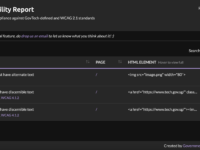
Purple A11y is a customisable, automated web accessibility testing tool that allows software development teams to find and fix accessibility problems, to ensure all users have access to inclusive digital services, especially the elderly and persons with disabilities (PWDs). It is an open-sourced solution to automate periodic tasks and the testing of government digital services.
Public healthcare in Serbia is transformed through innovative use of mixed reality technology powered by Artificial Intelligence, that increased efficiency and quality of healthcare, minimized risks and efforts, and optimizes procedures. Through remote collaboration, doctors have the same insight into patient’s condition without the need of physical presence, enabling joint real time inputs and medical interventions with experts from anywhere, as well as remote education for medical students.
The Smart Station project for future urban subway station has accelerated the digital transformation for public transportation industry, which has been slow to change, by applying fourth industrial technologies such as IoT, 3D digital twin technology, AI image analysis, and deep learning technology. Through this, the station has secured a control tower that can manage all lines for safe subway station operation, station workers can innovate their work through augmented reality UI systems.
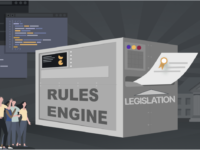
The Australian Government - Dept of Finance sponsored a Proof of Concept (PoC) that looked at how Rules as Code (RaC) might be provided as a shared utility that can be used to deliver simpler, personalised digital user journeys for citizens. RaC is the process of taking legislation and regulations and turning them into machine-readable code. It provides many benefits to citizens and government, including greater reuse, less duplication, greater transparency and accessibility of rules.
Case Study
Driving Artificial Intelligence in Public Services through accredited upskilling and project…
The Foundation Certificate in AI project seeks to make Ireland a world-leader in the ethical application of Artificial Intelligence across the Irish civil and public services by 2030 and is in line with the digital ambition, which the government of Ireland set itself. The project aims to upskill/reskill Irish Civil & Public Servants, identify a pipeline of potential AI projects that can improve service delivery, deliver value for money and is aligned National Strategy in AI & Innovation.
Case Study
Artificial Intelligence (AI) for Classification of Requests at the Citizen Services Desk.

The initiative is about the automation in the classification of service desk requests using AI techniques such as Natural Language Processing and open source tools to reduce the costs, optimize resources and improve response times in benefit of the citizens and the public institutions as service providers. The solution is developed by AGESIC (E-Government and Information and Knowledge Society Agency); this is an algorithm based solution in charge of classifying topics on different categories of…