Skip to content
An official website of the OECD. Find out more
Created by the Public Governance Directorate

This website was created by the OECD Observatory of Public Sector Innovation (OPSI), part of the OECD Public Governance Directorate (GOV).

How to validate authenticity

Validation that this is an official OECD website can be found on the Innovative Government page of the corporate OECD website.

View as: Map

Filter by:

Countries

Level of government

Sector

Year of launch

Stage of innovation

Recognition

Innovation Tags

Innovations:
0
This website, as well as any data and map included herein, are without prejudice to the status of or sovereignty over any territory, to the delimitation of international frontiers and boundaries and to the name of any territory, city or area.
Neighborhood Joint Delivery was introduced in 2022 to solve delivery issues. Delivery volume in Seoul since 2015 has increased by about 2.8 times, causing traffic, environmental, safety and labor problems. Seoul will create regional bases that integrate services from several couriers to deliver parcels collectively, reducing distance traveled by 50% and improving efficiency by 40%. The eco-friendly bases will collect recyclables, and serve as a base for unmanned autonomous vehicles.
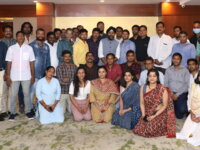
Aapti's the Driver Advisory Council (DAC) represents a new framework for engagement between gig workers and platforms in the ride hail space - a first of its kind initiative in India. The larger aim of this innovation is to create a mechanism for platform governance that focuses on gig workers rights, enabling participatory action and reflexive praxis. To this end, we’ve engaged with public bodies such as India’s NITI Aayog to socialise the DAC and its novel approach to platform work.
Challenge tenders are a new model designed to solve urging needs of the health system which usually aren't attractive enough for the start-up industry to engage in, such as fall prevention among elders, improvement of geriatric care in long term facilities and others. In order to attract digital based solutions to enter the health system, we initiated an innovative method of intervention which allows quick testing of technologies in health organization with MOH support for fast proven outcomes.
Covid-19 outbreak and the new reality led to increase in the demands for remote health services. The health system faced with an adaptive challenge of redesigning remote health services in no time. The Digital Health Department at the Israeli Ministry of Health founded a cross-organizational and cross-professional health practitioners’ community to advance wide scale, informed and safe telemedicine practices through the creation of a learning environment, knowledge sharing, and joint action.
The General Hospital Asklepieio Voulas has developed an exercise-based cardiac telerehabilitation program in order to increase the participation of eligible patients in cardiac rehabilitation services. Through this, Government and cardiovascular patients will benefit since participation in a CR program can reduce the risks of death and hospital readmissions. To our knowledge this is the first attempt to develop a telerehabilitation program offering a structured, real time, supervised exercise.
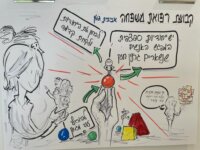
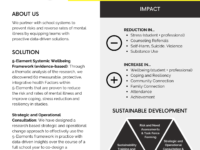
Mind the Class, a mental health prevention organization, is partnering with school systems to reduce the risks and reverse the rates of mental and behavioral health disorders by creating a community ecosystem. This full year project collaboratively designs a preventive implementation plan using proven wellbeing research and data-driven solutions in collaboration with our University of Warsaw partners and through local public and private partners support sustainable development.
In the VUCA (volatility, uncertainty, complexity and ambiguity) world, the tasks of the government are interconnected and require cross-border collaboration and dialogue within ecosystems. However, one of the key challenges is the lack of knowledge and easy-to-deploy tools. As partners of Work2.0Lab (Työ2.0Lab), we co-created and implemented Ecosystem School 1.0. Its purpose was to develop ecosystem thinking, capabilities and tools to support phenomenon-oriented work within ecosystems.
The Accountability Incubator is a creative peer learning program for young civic activists and change-makers who want to fight corruption and build accountability. It was developed to provide long-term support, networks and skills to people who are often overlooked by or left out of traditional civil society programs. It is innovative in that it uses creative tools, a long-term approach and the very latest thinking to shape governance globally.
The Smart Station project for future urban subway station has accelerated the digital transformation for public transportation industry, which has been slow to change, by applying fourth industrial technologies such as IoT, 3D digital twin technology, AI image analysis, and deep learning technology. Through this, the station has secured a control tower that can manage all lines for safe subway station operation, station workers can innovate their work through augmented reality UI systems.
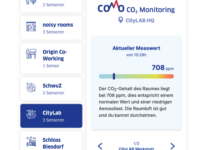
In COMo, the CO2 concentration (CO2 = Carbon Dioxide) serves as a measure for indoor air quality and aerosol pollution; the latter correlates with the potential (COVID) viral load. Objective CO2 readings via networked sensors enable operators to control the indoor air quality and thus reduce the risk of infection for visitors. Published data allow visitors to make decisions about visiting the facility. All content is available under open source licenses (MIT, BSD, Creative Commons).