
The UK Government Policy Profession has piloted a new model called Shared Policy Capability Project to support department leaders and policy makers undertake a facilitated self-assessment of their policy environment and identify opportunities for improvement. Through this the government aims to build capability at a department level and enable policymakers to take an active role in improving the environment in which they make policy.
Innovation Tag: Process Facilitation and Co-design
The Unique Scholarship Portal (Portal Único de Becas “Beca tu Futuro”) is a web platform that aims to concentrate all scholarship opportunities in a single portal. In this way, it documents and manages everything from the publication of the call for applications to the awarding of scholarships. The portal benefits all the citizens of the Dominican Republic who wish to apply for a scholarship. Moreover, the portal serves as a management tool for the scholarships' evaluators and the…
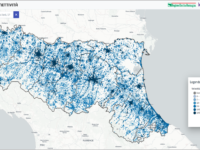
Emilia-Romagna’s Digital Agenda led a significant innovation process for public administration decision-making. The process resulted in a co-design phase with local administrations to structure and publish online the first geo-referenced regional Observatory on ultra-broadband connectivity in Italy. Multi-stakeholder participation made it possible to identify and highlight the various strengths and weaknesses of the tool, enabling its optimisation.

The pandemic has caused a significant increase in amount of people living on the street, who often have no documents and makes access to justice difficult. Pop Rua Jud brought together justice organisms and other public agencies in the same place to prevent citizens from being referred from one public agency to another, without solving their problem. It was innovative in that it brought together almost 50 federal, state and municipal public institutions, as well as civil society organisations,…
„Gemeinsam Digital: Berlin“(Together Digital: Berlin) combines the digital and smart city strategies. We define smart as solving future challenges in creative, open, experimental and participatory ways. This strategy helps to establish new work approaches, agile methods, competence building, and a systematic knowledge transfer between the administration and its inhabitants. By aligning technologies, methods, and cultural processes, it supports existing strategies to reach their respective…
The project is aimed to prevent the loss of the rights of refugee children in Türkiye due to language and translation difficulties in judicial processes. Children involved in judicial processes, translators, judges-prosecutors and other auxiliary judicial staff have benefited very much from the project. For the first time, the capacity of translators has been strengthened and the secondary trauma risks of children have been mimized.
Finland’s Ministry of Finance set a target for all public services to be available digitally by 2023 as part of its Program for Promotion of Digitalisation. The 'Co-designing future digital services' project is a new way of providing free expert mentoring for public sector organisations in developing their digital services, with an emphasis on collaborative learning. The aim of the project is to ensure that future digital services are designed to be human-centered and of high quality.
Case Study
Innovation Zones, Facets and Beyond – LIEPT (Lund Innovation Ecosystem Portfolio Tracking)…
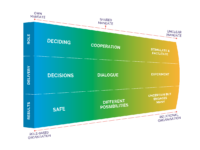
To provide a systematic approach for initiating and tracking collaborative development processes over time and inform investment decisions in multi-stakeholder environments, Future by Lund (FBL) has implemented a new model for innovation ecosystem portfolio tracking (LIEPT). The model benefits partnering stakeholders by building strategic competence for scaling solutions and working with innovation portfolios as an approach for governing and developing the ecosystem’s priority areas.
The Valenzuela City Social Welfare and Development Office (CSWDO) participated in the 13-week accelerator programme. The The accelerator is a 13-week innovation programme. The programme took the staff from CSWDO who needed to support individuals in crisis situations. They addressed the problems and applied innovation methodologies to create solutions that work. The programme targeted root-cause problems, facilitated collaboration, and upskilled participants – driving better outcomes.
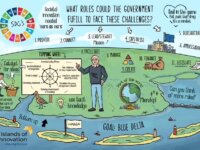
Together with partners from 5 other European countries, the Province of Fryslân developed an innovation model (so-called Tipping Approach) to catalyse and stimulate bottom-up innovations and harness ideas from local stakeholders. Complementing this, a governance model is being developed to provide civil servants with tools to implement these innovations in the social process in a simple and user-friendly way.